Sunday, 10 March 2013

Economy Of Brunei


Omar Ali Saifuddin Mosque brunei
Omar Ali Saifuddin Mosque
share About Brunei Darussalam's economi, This small, wealthy economy is a mixture of foreign and domestic entrepreneurship, government regulation, welfare measures, and village tradition. Crude oil and natural gas production account for nearly half of its GDP. Substantial income from overseas investment supplements income from domestic production. The government provides for all medical services and subsidizes rice and housing.

Brunei's leaders are concerned that steadily increased integration in the world economy will undermine
internal social cohesion although it became a more prominent player by serving as chairman for the 2000 Asia-Pacific Economic Cooperation (APEC) forum. Stated plans for the future include upgrading the labour force, reducing unemployment, strengthening the banking and tourism sectors, and, in general, further widening the economic base.

Brunei Modern Houses
The national airline, Royal Brunei Airlines, is trying to make Brunei a hub for international travel between Europe and Australia/New Zealand, and also has services to major Asian destinations. Brunei is increasingly importing from other countries.


  Shell Petrol Station in Brunei
  Shell Petrol Station in Brunei

The Brunei Halal brand
Brunei Darussalam in July 2009 launched its national halal branding scheme Brunei Halal which allows manufacturers in Brunei and in other countries to use the premium Brunei Halal trademark to help them penetrate lucrative markets in countries with significant numbers of Muslim consumers.

As envisioned by the Sultanate, the use of the Brunei Halal brand would signify to Muslim consumers the manufacturers' strict compliance with laws relating to Islamic teachings. Brunei also aims to build confidence in the brand through strategies that will both ensure the halal integrity of the products and unfaltering compliance with set rules governing the sourcing of raw materials, manufacturing process, logistics and distribution.

The Brunei Halal brand is said to be the first proper attempt to put together a global halal brand that will reap the potential commercial returns of catering to the consumption needs of Muslims worldwide.

A new company, government-owned Brunei Wafirah Holdings Sdn Bhd, has been established as the owner of the Brunei Halal brand. Wafirah has entered into a joint venture with Brunei Global Islamic Investment and Hong Kong-based logistics firm Kerry FSDA Limited to form Ghanim International Food Corporation Sdn Bhd. Ghanim International manages the use of the Brunei Halal trademark.

Producers that want to use the brand are required to first acquire the Brunei halal label (or the certification for compliance with accepted manufacturing and slaughtering practices under Islam) through the Department of Syariah Affairs' Halal Food Control Section. They can then approach Ghanim for their application to use the brand.

Brunei Agriculture
To achieve its target for food self-sufficiency, Brunei renamed its Brunei Darussalam Rice 1 to Laila Rice during the launch of the "Padi Planting Towards Achieving Self-Sufficiency of Rice Production in Brunei Darussalam" ceremony at the Wasan padi fields in April 2009.

In August 2009, the Royal Family reaped the first few Laila padi stalks, after years of multiple attempts to boost local rice production, a goal which was envisioned about half a century ago.

Health care
All Brunei citizens have access to free health care from public hospitals. The largest hospital in Brunei is Raja Isteri Pengiran Anak Saleha Hospital, and there are two private medical centres, Gleneagles JPMC Sdn Bhd and Jerudong Park Medical Centre. As of 2008, no hospitals in Brunei were undergoing international healthcare accreditation.

There is currently no medical school in Brunei, and Bruneians wishing to study to become doctors must attend university overseas. However, the Institute of Medicines had been introduced at the Universiti Brunei Darussalam and a new building has been built for the faculty. The building, including research lab facilities, was completed in 2009. There has been a School of Nursing since 1951. 58 nurse managers were appointed in RIPAS to improve service and provide better medical care.[31] In December 2008, The nursing college merged with the Institute of Medicines at the Universiti Brunei Darussalam to produce more nurses and midwives.

The Health Promotion Centre opened in November 2008 and serves to educate the public on the importance of having a healthy lifestyle.

Transport
Brunei is accessible by air, sea and land transport. Brunei International Airport is the main entry point to the country. Royal Brunei Airlines is the national carrier. The ferry terminal at Muara services regular connections to Labuan island (Malaysia). The speedboats provide passenger and goods transportation to the Temburong district. The main highway running across Brunei is the Tutong-Muara Highway. The country's road network is well developed. Brunei has one main sea port located at Muara. The export of its petroleum products is carried out through dedicated terminals.


Saturday, 9 March 2013

Entry Passes to Brunei Darussalam


Brunei Darussalam

Brunei Darussalam's unspoiled wilderness extends to its coasts and islands. 

The absence of large scale commercial or industrial operations means Brunei's rivers, bays and coastline are clean and uncongested by commercial shipping. A great venue for marine based sports and recreations.

Brunei Bay is a 35 km wide protected waterway bordered by rainforest covered mountains and dotted with islands. Undersea wrecks, coral-crusted reefs, white beaches, a myriad of marine life and warm water present a range of fun activities, day and overnight trips and attractions.

Entry Passes

What is a Brunei Visit Visa and Entry Pass?

A Visa is a pre-obtained document (stamped into a passport) that verifies permission to enter the country. They are obtained from Brunei High Commissions and Embassies in other countries before arrival at a Brunei Immigration Checkpoint. 

Nationals from many countries have automatic permission to enter Brunei and do not require a pre-arranged Visa to receive an Entry Pass at an Immigration Checkpoint. (see list below)

An Entry Pass is issued on entering Brunei; it is stamped into the passport at an Immigration Checkpoint. It defines how long the person can stay in Brunei, and whether the pass is valid for single or multiple entry. 


There are 10 Immigration Checkpoints in Brunei:

1.      Brunei International Airport, Berakas (commercial & private aircraft)
2.      Bandar Seri Begawan Wharf (water taxis to/from Limbang)
3.      Kuala Lurah, Brunei-Muara district  (vehicles to/from Limbang)
4.      Sungai Tujuh, Kuala Belait district (vehicles to/from Miri & Kuching)
5.      Puni, Temburong district (vehicles to/from Limbang)
6.     Labu, Temburong district (vehicles to/from Lawas & Kota Kinabalu)
7.      Muara Port  (commercial shipping & cruise ships)
8.      Anduki Airport, Seria (private aircraft - Brunei Shell helicopter base)
9.      Customs Wharf, Kuala Belait  (ships, ferries & private yachts)
10.    Serasa Ferry Terminal – Muara (ferries to Labuan & Lawas, and private
                                                     yachts)

Requirements to receive an Entry Pass on arrival in Brunei:

1.  valid passport or /travel document 

2. 
The passport must have a validity of at least 6 months when entering Brunei


3.  Nationals from the following countries do not need a Visa to enter Brunei:


Canada, Denmark, Germany, France, Japan, South Korea, Liechtenstein, Luxembourg, The Netherlands, Belgium, Switzerland, Sweden, The Republic of Maldives, Norway, New Zealand, Indonesia, Thailand, The Philippines - receive a 14 day visit pass on arrival

Australia, Malaysia, Singapore, United Kingdom - receive a 30 day visit pass on arrival

United States - receive a 90 day visit pass on arrivalIf you plan to travel in and out of Brunei during the period of your entry pass, be sure to request a multiple-entry visit pass

4. Nationals from other countries require a valid pre-arranged Visa in their passport prior to arrival in Brunei

4. A Transit Visa  can be obtained at any immigration entry point by any nationality on arrival if arriving from one country/port/town and traveling on to a different country/port/town. Transit visas cannot be issued if you are returning to the place of embarkation where your flight/boat etc started from. Transit visas are only available for up to 72 hour period. 

It is possible to apply for a Visit Pass or Transit Pass extension at the Immigration Office once admitted to Brunei.

Nationals who require a Visa and who intend to travel in an out of Brunei during the validity period of their visa should ensure they apply for a multiple entry visa.

Nationals from Israel are not normally granted a Visa for Brunei.

How to apply for a pre-arranged Visitor Visa?

1.
Submit an application to the Brunei Embassy or High Commission where the applicant resides.

2.
Submit an application to any other
Brunei Embassy or High Commission in any other country.          http://www.mfa.gov.bn/

3.
Be prepared to show evidence of a return or ongoing ticket, or other means of leaving the country eg: vehicle, yacht etc.
  

Visit Visa/Entry Pass Fees (valid from 1st September 2005):

Transit Pass -     Bn$5.00  
Single Entry -    
 B$20.00
Multiple Entry -    B$50.00
 
Remember:
1. Be careful to select the desired Visa type on the application form at the point of entry.
2. Be sure to have small denomination notes in Brunei or Singapore currency to pay for the Visa; Immigration officials don’t operate a foreign currency exchange service, and it’s very likely they won’t have change for big notes.

Brunei - It's different. It's intriguing.
It's your window into Borneo

source :
http://www.bruneibay.net/

Friday, 8 March 2013

Transportation in Brunei Darussalam


Transportation (land Transport and water transport) moda in Brunei Darussalam when Visiting Brunei

Brunei Ferry Route
Brunei Ferry Route
Taxis

Metered taxis are now available at most hotels and shopping centres as well as the airport. In the capital, Bandar Seri Begawan, taxis are located at the multi storey carpark at Jalan Cator.

Car Hire

Self drive or chauffeur-driven cars are available for hire from major hotels and the airport. 

  public Bus in Brunei
 Bus in Brunei

Buses

There are three bus lines in Bandar Seri Begawan, the Central Line, Circle Line and Northern Line.
This public transport operates from 6:30 am to 6pm, with Central Line buses running every 15 minutes and the Circle Line once every 20 minutes. 

The Central Line stops at the following bus stations: international airport, post of office, government of offices, government schools, the Terrace Hotel, the Sheraton Utama Hotel, the Youth Centre, main bus terminal in Bandar, the Arts and Handicraft Centre, the Brunei Museum and the Malay Technology Museum. 

The Circle Line stops at the main bus terminal in Bandar, the Ripas hospital, the Jame Asr' Hassanil Bolkiah Mosque, the Kiarong fish and vegetable market, the Centrepoint in Gadong, government offices, Immigration/Labour Department, the Sultan Hassanal Bolkiah National Stadium, the Pusat Dakwah Islamiah, the SMART Department Store, Terrace Hotel, Sheraton Utama Hotel and the Youth Centre. 
The Northern Line caters to three routes, Northern Line 1, Northern Line 2 and Northern Line 3. 

Northern Line 1 and 2 runs between Berakas Camp, International Airport and the Bus terminal in Bandar, whilst Northern Line 3 runs between Berakas Camp, the Bus Terminal and The Malay Technology Museum in Kota Batu. 

To get to major towns outside of Bandar, you can catch buses going to Seria and Kuala Belait at the Bandar bus terminal located at the multi storey carpark. 
Bus fares start from as low at $1. 

Airlines

Fly Brunei with Royal Brunei Airlines (RBA), flies to over 30 cities. Major airlines such as Singapore Airlines, Thai International, Garuda Indonesia, Philippines Airlines and Malaysia Airlines also service Brunei Darussalam.

Brunei Ferry
Brunei Ferry

Water Taxis

Water taxis are the most common form of transport in Kampong Ayer. Fares are negotiable. Regular water taxi and boat services to Temburong and to the Malaysian towns of Limbang, Lawas, Sundar and Labuan are also available. Boat services to Temburong start at 7:45 am and end at 4:00 pm.

Thursday, 7 March 2013

Traveling in Brunei Darussalam


beach in Brunei Bay

Visiting Brunei Darussalam, Brunei Bay, on the north-west coast of Borneo, is boarded on three sides by mangroves, rainforests and mountains. 
It opens to the west onto the South China Sea.

Brunei travel is a safe haven for wildlife, rainforest and reefs. 
Brunei Darussalam travel,  is also a safe haven for wildlife lovers, adventure travellers, eco-tourism, wilderness travellers, divers, sailors and exploring.

Luxury hotels, jungle chalets, traditional longhouses and campsites cater to all tastes and budgets. 

brunei Ulu Temburong National Park


brunei Ulu Temburong National Park

The Ulu Temburong NationalPark draws thousands of visitors, scientists and school students each year.
The sheltered waters of Brunei Bay adjoin the Malaysian territories of Sabah, Sarawak & Labuan, and Brunei. 
The present Sultan of Brunei heads the longest serving family monarchy in the world, and leads a small nation with one of the highest average incomes in Asia. 

Mt Kinabalu, Mulu Caves, The Kinabatangan River, Sepilok Orangutan Sanctuary, Turtle Island, Pulau Tiga and Sukau are some of the popular destinations. 
Air, road, ferry, sailing and walking links from Brunei bring overseas visitors to all these attractions. 

Brunei Darussalam travel,  was the traditional safe anchorage and gateway to Borneo. With its modern infrastructures underlying traditional lifestyles it is the same today. 
From Brunei international airport the wilderness rainforest, Malay Technology Museum, mangrove islands,  Royal Regalia, historic water village, Sultan's Brunei palace, sandy beaches or undersea wrecks is less than 60 minutes.


 Brunei River

The Brunei River enters Brunei Bay, flowing from Bandar Seri Begawan, the capital of modern Brunei Darussalam. 

Surrounded by mangroves fed by the nutrients from rainforest streams, Brunei Bay has always been popular for fishing spot. 
The coastal reefs and wrecks are home for underwater wildlife, Brunei Fishing spot, that attracts divers and fishermen.

The amazing contrasts of Borneo are nearby. 
Experience them in tours and activities in isolated regions untouched by industrial congestion, or by exploring emerging cities where twentieth century technologies nestle amongst century old lifestyles.

Borneo remains the mystical island to explore. 
Whether it's the unique cultures, history or natural environment, there is plenty to see and experience. 
There are places to relax, activities to challenge, rides to excite, food to enjoy and lifestyles to discover.

 source :
http://www.bruneibay.net/

Sunday, 3 March 2013

About Negara Brunei Darussalam Country

soas mosque

Information About Brunei Darussalam country all in main aspect


OFFICIAL NAME
Negara Brunei Darussalam (The Country of Brunei, Abode of Peace)

  Brunei Darussalam Flag

Brunei Darussalam Flag
Yellow with two diagonal bands:
white (top band, double-width) and black (starting from the upper hoist side).
The national emblem is superimposed in red at the flag's centre.
The emblem includes the following components:
  • Swallow-tailed flag, representing Royalty
  • The Royal umbrella
  • Winged column, symbolizing the protection of justice, tranquillity, prosperity and peace
  • Two upraised hands, signifying the Government's pledge to promote welfare, peace and prosperity
  • An upturned crescent, symbol of Islam, the national religion of Brunei
  • Embodied within the crescent in yellow Arabic script is the nation's motto, which can be roughly translated: Always in Service by God's Guidance
  • A scroll beneath the crest with Arabic script reading "Brunei Darussalam" or "Brunei, the Abode of Peace" 
Location


Located on the northern shore of the Island of Borneo, between longitudes 114'04" and 114'23" East and latitudes 4'00" and 5'05" North. 
Brunei, although occupying less  than 1% of Borneo's land area, is the only sovereign country on
the island, which it shares with the Indonesian provinces of West, East, South and Central Kalimantan and the Malaysian states of Sabah and Sarawak.

LAND AREA
5,765 sq. km.
POPULATION
372,360 (2005 est.)
DENSITY
65 persons/sq. km.
CAPITAL CITY
Bandar Seri Begawan
POPULATION
236,200 (district)

ETHNIC GROUPS

Malay
67%
Chinese
15%
Indigenous tribes
6%
Others
12%
LANGUAGE

brunei people
 

Bahasa Melayu (Malay) is the Brunei official language, but English is widely spoken. Mandarin, Chinese dialects and native languages of Borneo are also spoken by segments of the population.

RELIGIONS

Islam is the official religion of Brunei

Islam is the official religion of Brunei Darussalam as stated in the Brunei Constitution, with His Majesty the Sultan and Yang Di-Pertuan as the head of the Islamic faith in the country.
Thus Islam plays a central role in the life of every Muslim in Brunei Darussalam.
Other faiths practiced in the State include Christianity and Buddhism.

NATIONAL PHILOSOPHY

soas mosque

Since gaining independence from the British in 1984, Brunei has adopted the national philosophy of the Malay Islamic Monarchy (Melayu Islam Beraja), a system that encompasses strong Malay cultural influences, stressing the importance of Islam in daily life and governance, and respect for the monarchy as represented by His Majesty The Sultan.
It is a philosophy of tolerance, which allows other cultures to follow individual traditions and to practice other religions.
CLIMATE

Temperate equatorial climate year round, characterized by temperatures ranging between 23 to 32 degrees Celsius, and an average annual rainfall of 320 cm. There is no distinct rainy season, though the period from November to March tends to bring heavier rains.

 ADMINISTRATIVE DIVISIONS

4 Districts: Brunei-Muara (housing the capital city), Tutong, Belait, and Temburong


HEAD OF STATE

His Majesty Sultan Haji Hassanal Bolkiah


His Majesty Sultan Haji Hassanal Bolkiah Mu'izzaddin Waddaulah Ibni Al-Marhum Sultan Haji Omar 'Ali Saifuddien Sa'adul Khairi Waddien, Sultan and Yang Di-Pertuan of Brunei Darussalam.
His Majesty is the 29th ruler of his line, which began with Sultan Muhammad in 1405. 

SYSTEM OF GOVERNMENT

Independent sovereign constitutional Sultanate, with His Majesty The Sultan as the supreme executive authority.
His Majesty is advised by an appointed Council of Cabinet Ministers, Religious Council, Privy Council, a Council of Succession and a Legislative Council.

ECONOMY

brunei oil


With a total GDP of around US$6.5 billion and a per capita GDP of around US$18.3 thousand (2002), Brunei's resource-rich (oil & natural gas) economy affords its population high living standards, resulting in positive social indicators such as high literacy rates, longer life expectancy, and low unemployment and crime rates. The government provides for all medical services and subsidizes rice and housing.

Government, construction, services, retail and some light manufacturing are the other major sectors in Brunei's economy.
The government is currently working towards economic diversification — in which tourism plays an important role — as well as encouraging foreign investment and developing education and human resources. These measures are designed to prepare the nation for the challenges of the future when the oil and gas reserves will have been depleted and new sources of income will be needed to maintain the current high standards of living enjoyed by Bruneians.


TOURISM INFRASTRUCTURE
 

With over 2,500 rooms spread among 30 establishments ranging from guesthouses to the super luxurious Empire Hotel and Country Club, and with a dozen or so active inbound tour operators, Brunei has a well-established, yet underutilized tourism infrastructure attracting an increasing number of regional and international visitors.  

TOURISM ARRIVALS

Brunei recorded approximately 1 million foreign visitors in 2003, the vast majority arriving from Malaysia through land entry points.
Based on estimates derived from hotel occupancy rates and on market intelligence gathered from inbound operators, Brunei Tourism estimates the number of bona fide leisure and business tourists to be around 100,000 in 2003, with a 3-day average length of stay.
Most of these tourists originated from the short- and medium-haul markets, though a significant portion originated from long-haul markets, mainly UK and Germany.
Brunei Tourism’s objective is to increase international tourist arrivals by a minimum average rate of 7% yearly, as well as to increase average length of stay and expenditure.

INTERNATIONAL TRANSPORT LINKAGES

Brunei enjoys a convenient location at the heart of Southeast Asia and is well-connected to destinations worldwide.

Air
  

Royal Brunei Airlines

Royal Brunei Airlines, the nation’s flagship carrier, flies non-stop or direct to most major Asia-Pacific destinations and the Middle East, as well as to Europe via London and Frankfurt. Meanwhile, Malaysia Airlines, Singapore Airlines, Thai Airways, Dragonair and Philippines Airlines serve Bandar Seri Begawan and offer one-stop connections to the rest of the world through their hubs in Kuala Lumpur, Singapore, Bangkok, Hong Kong and Manila. 

Sea
Ferries link Brunei with the Malaysian island of Labuan off the coast of Sabah, and to the Malaysian towns of Limbang and Lawas in Sarawak.

Road
An extensive overland road network also connects Brunei to Sarawak and Sabah, while the Indonesian province of Kalimantan can be reached by road, air or boat via Sarawak or Sabah.

HEALTH, SAFETY AND SECURITY

Brunei is free from malaria and other tropical diseases, is outside the typhoon belt, has no volcanoes, and is not prone to earthquakes or other major natural disasters.
The country also enjoys government stability and economic prosperity, resulting in a very low crime rate.

Ok readers, thats it the information About Brunei Darussalam.

Source :
http://www.bruneitourism.com/

Saturday, 2 March 2013

Brunei Pictures by The VirtualTourist

brought by The Virtual Tourist
Sunset In Brunei
Sunset In Brunei
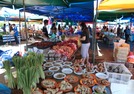
brunei Kuala Belait market
Kuala Belait market
brunei Kuala Belait market
kuala Belait Market
brunei Kuala Belait market

kampong Ayer brunei
kampong Ayer
kampong Ayer brunei
Kampong Ayer

Brunei Golden mosque
Kuala belait brunei
hotel in Kuala belait
Jame Asr Mosque brunei
Jame Asr Mosque
Fruits in Brunei
Fruits in Brunei
Kuala Belait River
Kuala Belait River
soas moqsue in brunei

brunei Kuala belait River in Sunset
Kuala belait River in Sunset
Sunset in Brunei
Sunset in Brunei
brunei Kuala Belait Town
Kuala Belait Town
Water Taxis in kampong Ayer brunei
Water Taxis in kampong Ayer
brunei yayasan Hassanal Bolkiah view on River
yayasan Hassanal Bolkiah view on River
brunei Tanjung Pelompong kampong Serasa
Tanjung Pelompong kampong Serasa
brunei Kampong Serasa beach
Kampong Serasa beach
brunei

brunei soas mosque

brunei soas mosque

Friday, 1 March 2013

Demographics of Brunei


Demographics of Brunei

Demographics
Information About Brunei Darussalam demographic, The official language of the nation is Malay (Malay: Bahasa Melayu), although an important minority speak Chinese. The local variety of Malay (Kedayan or Bukit Malay), spoken natively by two thirds of the population, is quite divergent from and unintelligible to Standard Malay. The most important 
aboriginal languages are Iban, and two languages called Tutong, each with about 20,000 speakers.

English is also widely spoken and there is a relatively large expatriate community with significant numbers of British and Australian citizens.

Ethnicity
* Malay 66.3%,
* Chinese 11.2%,
* Indigenous 3.4%,
* Other 19.1% (2004 est.)


Brunei Share : The legends surrounding of Bukit Tempayan Pisang

The legends surrounding Bukit Tempayan Pisang can be promoted to attract tourists. This suggestion was yesterday made by Minister of Hom...